Indian educator, artist, and social reformer Rouble Nagi, founder of the Rouble Nagi Art Foundation, was awarded the $1 million Global Teacher Prize 2026 at the World Governments Summit in Dubai. His Highness Sheikh Hamdan bin Mohammed bin Rashid Al Maktoum, Crown Prince of Dubai, Deputy Prime Minister and Minister of Defence of the UAE, and Chairman of The Executive Council of Dubai, presented the award, alongside Sunny Varkey, founder of GEMS Education and the Varkey Foundation.
Based in Mumbai, India, Nagi is widely known for using art as a tool for education, social change, and community transformation, particularly in India’s most marginalised slums and rural areas. Over a 24-year journey, she has reached more than one million children, turning classrooms, streets, and even walls into spaces for learning.
Connector spoke to Nagi about her international recognition, what impressed her most about teachers and education leaders in the UAE, and the parallels between the UAE’s vision for learning and her mural classrooms in India.
Early Inspirations
"It was a dream moment. I was very surprised and humbled. It was a great honour, and I am so thankful to His Highness Sheikh Hamdan and Mr Sunny Varkey for providing me with this incredible platform to share my message with the world and connect with other educators. It all still feels like a dream,” Nagi shared.
Nagi’s journey began long before she won the award. As a little girl, Nagi realised that many children are denied access to education. This early awareness stayed with her, and over time, she saw the profound and lasting impact education can have, not just on individual children, but on communities. Nagi firmly believed that education can break cycles of poverty, restore dignity, and give young people the courage to imagine futures beyond what they think is possible.
She began modestly, working with just 30 children in a small workshop. Today, her initiatives have scaled nationally, touching over a million young lives.
“My mission has always been to get every child in India into school, and the GEMS Education Global Teacher Prize has given me a worldwide platform to spread my message of hope and show the world that art is a powerful tool to instil the love for learning in children.”
Turning Neglected Walls Into ‘Living Classrooms’
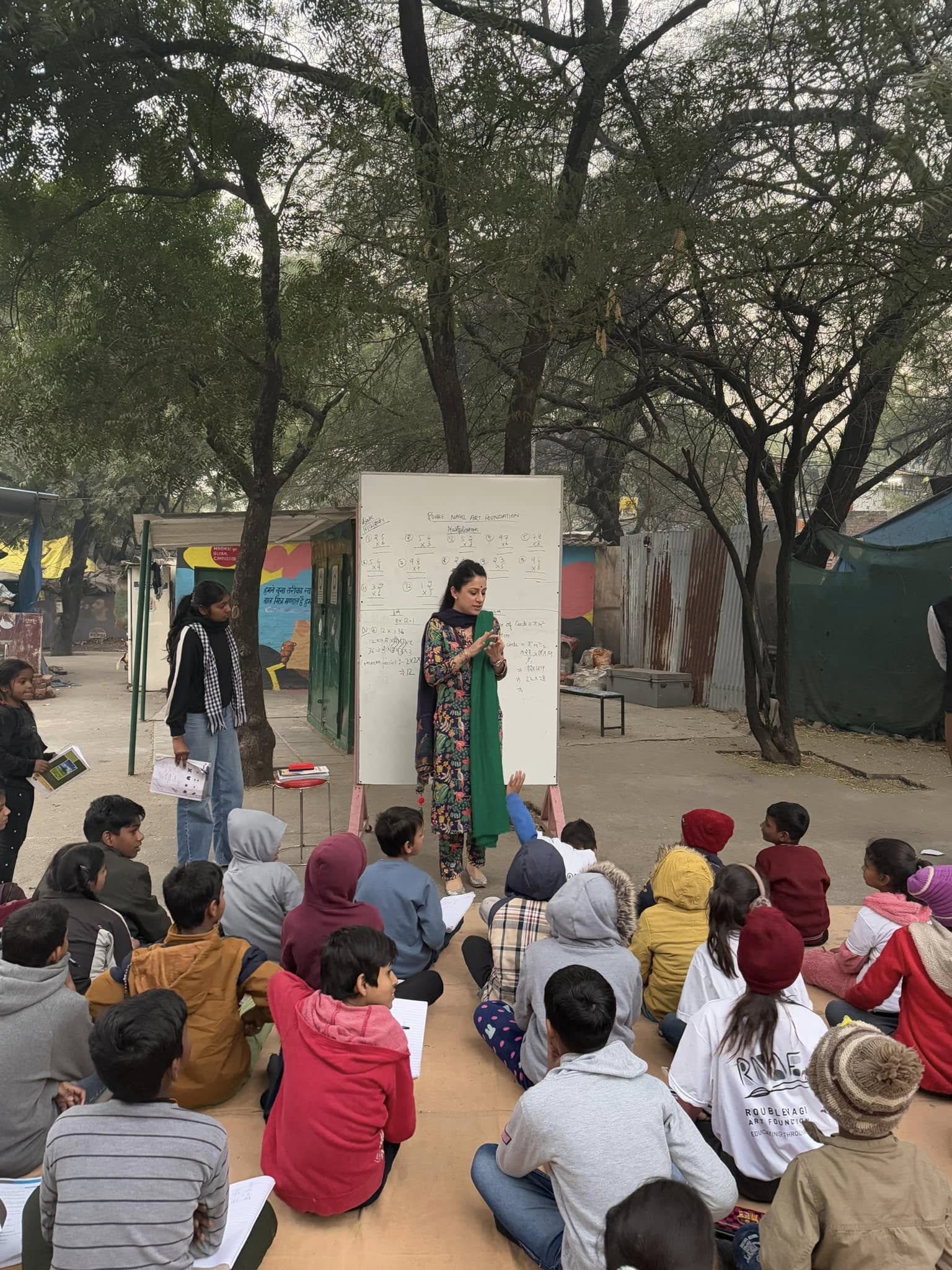
Nagi, who developed a pedagogy for art, began her work in the slums of Mumbai a decade ago. Through the Rouble Nagi Art Foundation, she has developed over 800 learning centres in more than 100 slums and villages in India. The centres also support children already enrolled in school, providing remedial education, emotional safety, and creative enrichment.
Further, Nagi's innovative 'Living Walls of Learning' initiative turned neglected walls into vibrant, interactive open-air murals. These serve as dynamic classrooms teaching literacy, mathematics, science, hygiene, history, environmental care, and civic duty, actively pulling in children, involving parents, and mobilising communities for education.
“Education can’t be separated from the realities of poverty, hygiene, and community wellbeing. That’s why my programmes go beyond the classroom to address the barriers that stop children from learning. By running hygiene workshops and creating murals that promote clean habits, we help reduce illness, improve attendance, and make neighbourhoods safer for learning. We also work with parents on nutrition, gender equality, and the long-term value of education, building trust and support at home.”
Reflections From Dubai
Speaking about her experience in Dubai, Nagi said that what struck her most was the openness and commitment of educators and policymakers to reimagining education.
Dubai brings together people from all over the world, and Nagi explained that this diversity creates a powerful exchange of ideas, experiences, and solutions.
Drawing parallels between the UAE's education vision and her mural classrooms back home, Nagi explained that Dubai’s high-tech, future-focused education system and her mural classrooms in the slums of India may seem worlds apart. However, at their core, they’re driven by the same belief that learning should be creative, inclusive, and designed to unlock human potential.
“I was especially inspired by the UAE’s bold vision for education. Innovation, technology, and wellbeing are seen as essential, not optional. The conversations I had made me feel that, even though our contexts are very different, we’re working toward the same goal: creating learning environments where every child feels valued, supported, and empowered to reach their potential,” she shared.
In her message to parents, Nagi said, “Learning does not live only in school. It lives in the small, everyday moments. You don’t need more time; you need more intention. When children see that their parents value curiosity, creativity, and kindness, they carry that mindset into the classroom and beyond. Even small, consistent moments of connection can shape how a child learns, grows, and believes in themselves.”